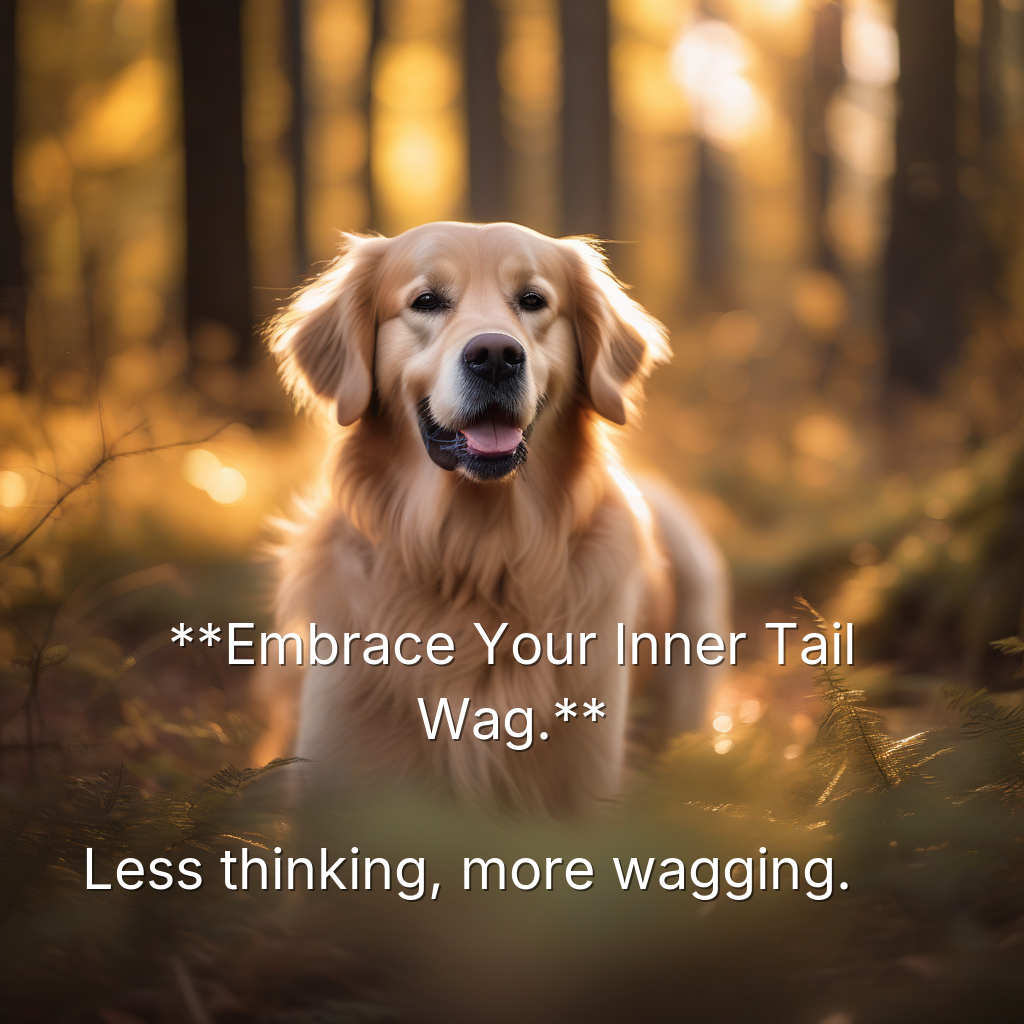
We often anthropomorphize dogs, attributing human emotions and intellect. But what if their unbridled joy, expressed through that frantic tail wag, holds a profound philosophical truth we’re missing? Consider the wag. It’s a physical manifestation of contentment, a direct response to positive stimuli. There’s no cynicism, no hesitation. Just pure, unadulterated happiness.
Modern society thrives on complex emotions – ambition, disappointment, envy. We overthink, we analyze, we second-guess. Dogs, seemingly, don’t. They exist in a perpetual present, fueled by treats, belly rubs, and the sheer pleasure of smelling a fire hydrant.
The wag isn’t a calculated action; it’s an involuntary expression of being. It suggests a state of being where happiness isn't earned, but simply *is*. Could this be a radical simplification of the human condition?
Think about the concept of Stoicism – accepting what you cannot control and focusing on virtue. A dog’s tail wag is the ultimate Stoic response. A squirrel runs by? Wag. Rain starts falling? Wag (a slightly different wag, perhaps, but still a wag!). A stern scolding? Eventually, a wag.
Perhaps we should all strive for a little more ‘tail wag’ in our lives. Less worrying about the future, less dwelling on the past, and more appreciating the simple joys of the present. It’s not about denying negative emotions – even dogs experience sadness – but about cultivating a capacity for joy, regardless of circumstance.
And the pun?
It's all pretty *paw-some*, isn't it?
Modern society thrives on complex emotions – ambition, disappointment, envy. We overthink, we analyze, we second-guess. Dogs, seemingly, don’t. They exist in a perpetual present, fueled by treats, belly rubs, and the sheer pleasure of smelling a fire hydrant.
The wag isn’t a calculated action; it’s an involuntary expression of being. It suggests a state of being where happiness isn't earned, but simply *is*. Could this be a radical simplification of the human condition?
Think about the concept of Stoicism – accepting what you cannot control and focusing on virtue. A dog’s tail wag is the ultimate Stoic response. A squirrel runs by? Wag. Rain starts falling? Wag (a slightly different wag, perhaps, but still a wag!). A stern scolding? Eventually, a wag.
Perhaps we should all strive for a little more ‘tail wag’ in our lives. Less worrying about the future, less dwelling on the past, and more appreciating the simple joys of the present. It’s not about denying negative emotions – even dogs experience sadness – but about cultivating a capacity for joy, regardless of circumstance.
And the pun?
It's all pretty *paw-some*, isn't it?